
I Tracked My Mood Every Day for Two Months and My Feelings Have Some Explaining to Do
After two months of daily mood tracking, the patterns were hard to ignore. From the 'I'm fine' autopilot to surprising sleep and meeting correlations, here's what the data revealed.
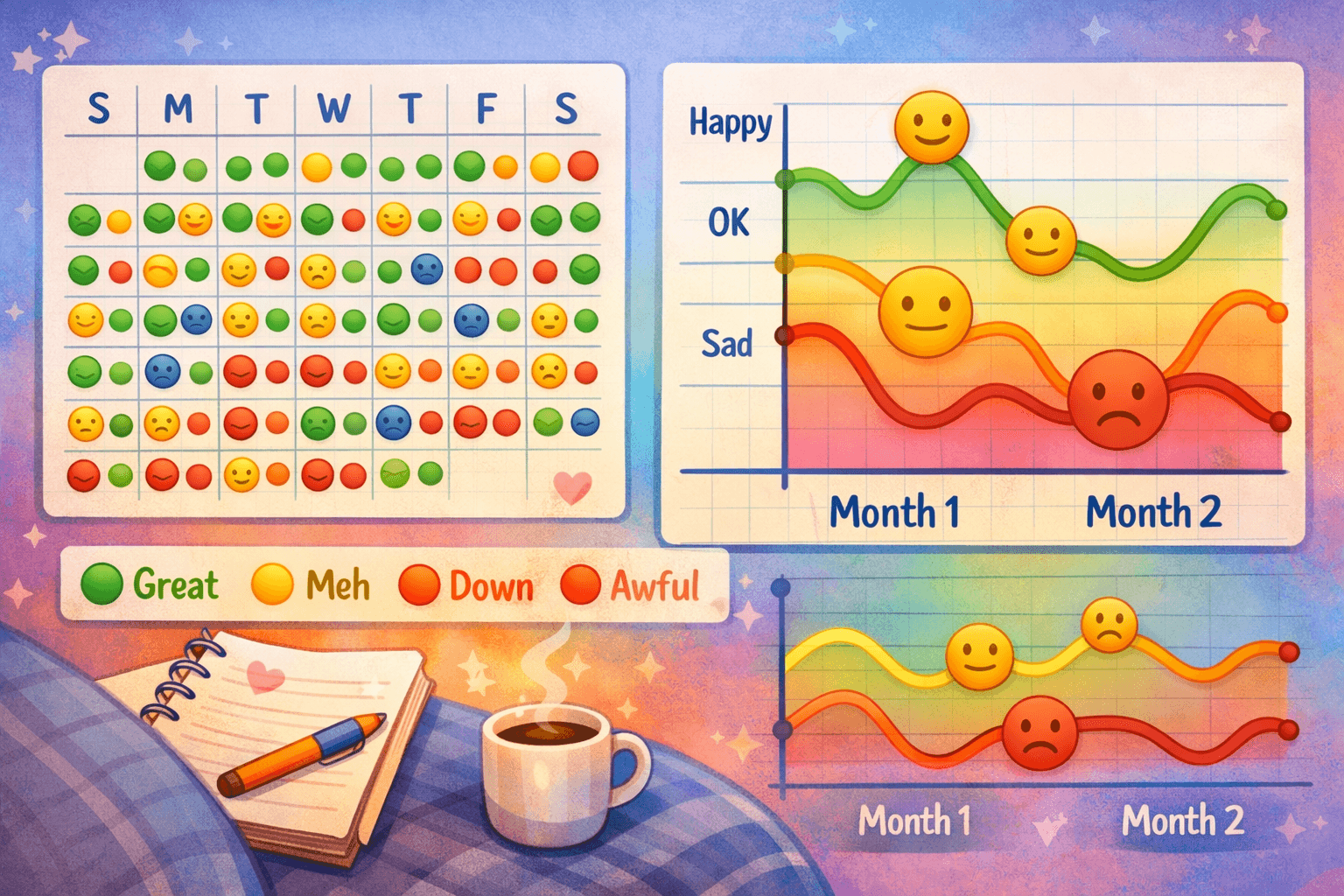
I always thought I had a decent read on my own emotions. Happy, sad, stressed, fine. Four settings, like a ceiling fan. Turns out I was wrong about that in ways that are almost embarrassing to admit.
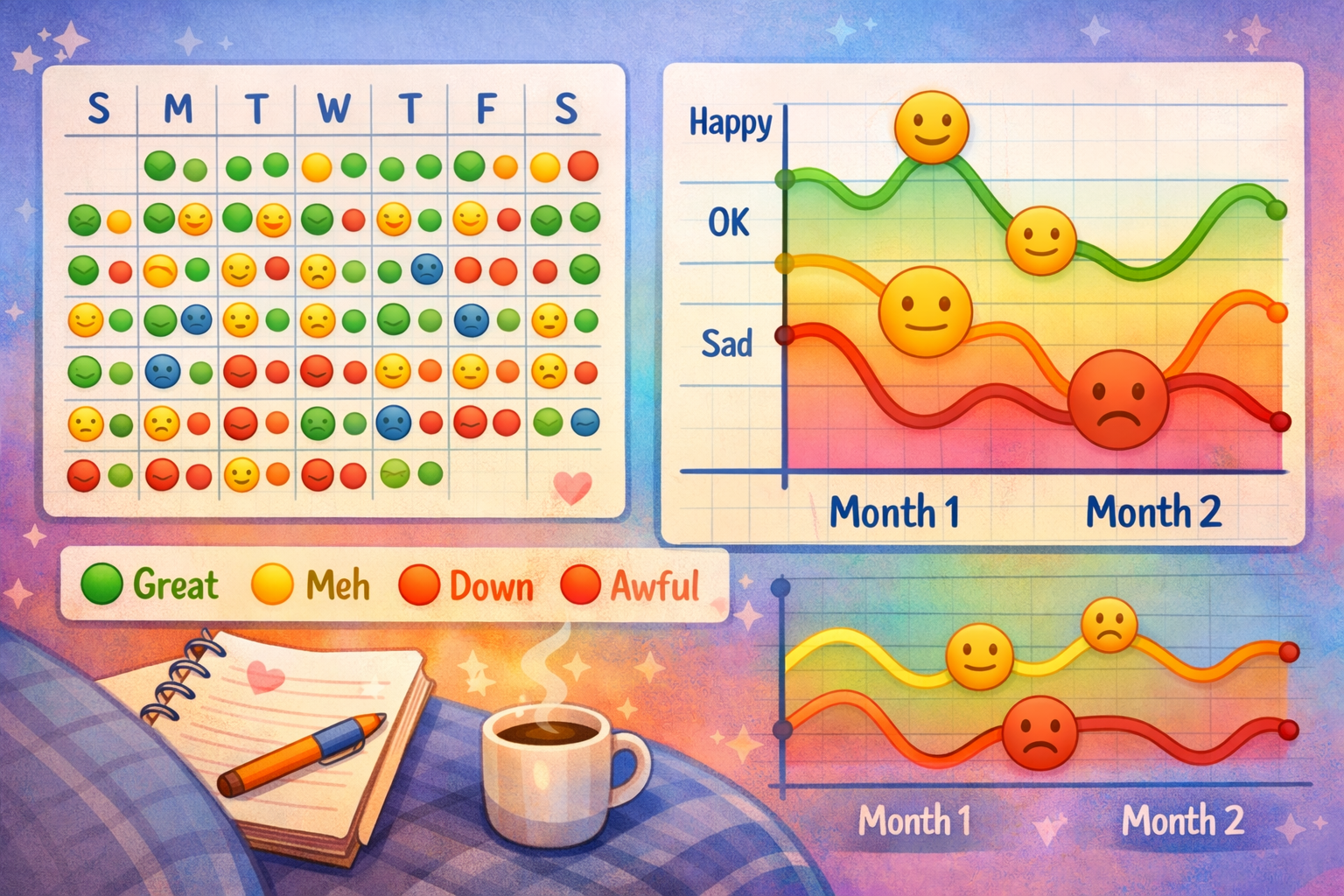
Two months ago I started logging my mood every day. Not in a clinical way, not with a therapist breathing down my neck. Just a quick check-in: how am I actually feeling right now? I picked a mood, sometimes jotted a sentence or two about why, and moved on with my life.
Here's what I thought would happen: nothing. I figured I'd confirm what I already knew about myself and feel mildly smug about my self-awareness.
Here's what actually happened: the data made me look like a stranger.
The "I'm Fine" Problem
For the first couple of weeks, I picked "good" or "okay" almost every single day. Not because I was actually good or okay every day, but because I'd trained myself to round up. We all do this. Someone asks how you're doing, you say "good," and you move on. Eventually your brain just starts filing everything under "good" by default.
It took about ten days before I got honest with myself. I started picking "anxious" on days I was clearly anxious. "Tired" on days I was running on fumes. "Frustrated" when my code wouldn't compile and I'd been staring at the same error for an hour.
The first week of honest tracking looked very different from the first week of autopilot tracking.
Patterns Are Annoying Because They're Usually Right
After about six weeks, I had enough data to actually see trends. And the trends were not subtle.
Mondays? Consistently lower mood. Not groundbreaking, sure. But I also noticed that my Wednesday moods were almost always higher than any other day. I couldn't figure out why until I looked at my calendar and realized Wednesdays were the one day I had zero recurring meetings. My best emotional day of the week was the day nobody asked me to be on a video call. That's not a coincidence. That's a pattern with a very clear message.
I also noticed my mood tanked reliably two days after a bad night of sleep. Not the day after (that day I'm running on adrenaline and coffee, apparently), but two days later. I never would have connected those dots without the data sitting in front of me.
The Journal Connection
Here's where it gets interesting. On days where I wrote a journal entry AND logged my mood, I started noticing that the mood I picked before writing and the mood I felt after writing were often different. Not dramatically different. But there's a consistent pattern of "I feel like a 4 out of 10" turning into "okay, maybe a 5.5" after getting thoughts onto a page.
That half-point to full-point bump doesn't sound like much. But compounded over weeks, it's the difference between "I'm generally stressed" and "I'm generally managing it."
I'm not going to sit here and tell you journaling is therapy. It's not. But I will say that the combination of tracking your mood and writing about your day creates a feedback loop that's hard to get any other way. You start to see which inputs lead to which outputs. You become a little scientist running experiments on your own brain, except the lab is a text editor and the data is your feelings.
What Surprised Me Most
The biggest surprise wasn't any single pattern. It was how wrong my retroactive memory was compared to the actual data.
If you'd asked me to describe last month from memory, I would've told you it was stressful and busy. That's the story my brain constructed. But when I looked at the actual mood logs, the month was mostly neutral to positive, with a rough four-day stretch in the middle that my brain decided to make the main character of the whole month.
We're all walking around with a highlight reel of our worst moments pretending it's a documentary. The mood log is the documentary.
You Don't Need to Overthink This
If you want to try this, the barrier is genuinely low. You don't need a system, a framework, or a color-coded spreadsheet. You just need to answer one question once a day: how do I actually feel right now?
Not how you think you should feel. Not how you felt yesterday. Right now.
Give it two weeks of honest answers and you'll start seeing things. Give it a month and you'll have a hard time stopping, because the data becomes weirdly compelling. You'll find yourself wanting to know what happens next in the story of your own emotional life, which is a sentence I never thought I'd write and yet here we are.
The ceiling fan has more than four settings. Most of us just never bother to look at the dial.
Track your mood and journal in the same place. Start with DayGrid - it's free, and it takes about 30 seconds to set up.
Ready to start writing?
DayGrid is free, takes 30 seconds to set up, and you can start with just one sentence.
Start Writing Free