
Why I Created DayGrid
I didn't set out to build a product. I set out to fix a problem I kept running into every morning. The product part happened later.

I didn't set out to build a product. I set out to fix a problem I kept running into every morning. The product part happened later.
There's a moment that probably sounds familiar. You download a new app because you want to get your life together. You spend twenty minutes setting it up, customizing categories, picking color themes, toggling notification settings. By the time you're done configuring the thing, you've used up all the motivation that made you download it in the first place. You open it once the next morning, skip it the day after, and by Friday it's sitting in a folder called "Productivity" next to six other apps you also don't use.
I've lived that cycle more times than I'd like to admit. And eventually, instead of downloading the next app, I decided to build the one I actually wanted.
The Problem With "Just Track It"
A few years ago I started getting serious about building better daily habits. Exercise, sleep, reading, the usual list that every self-improvement article tells you will change your life. And the advice always sounded the same: track your habits, review your progress, stay consistent.
Simple enough, right?
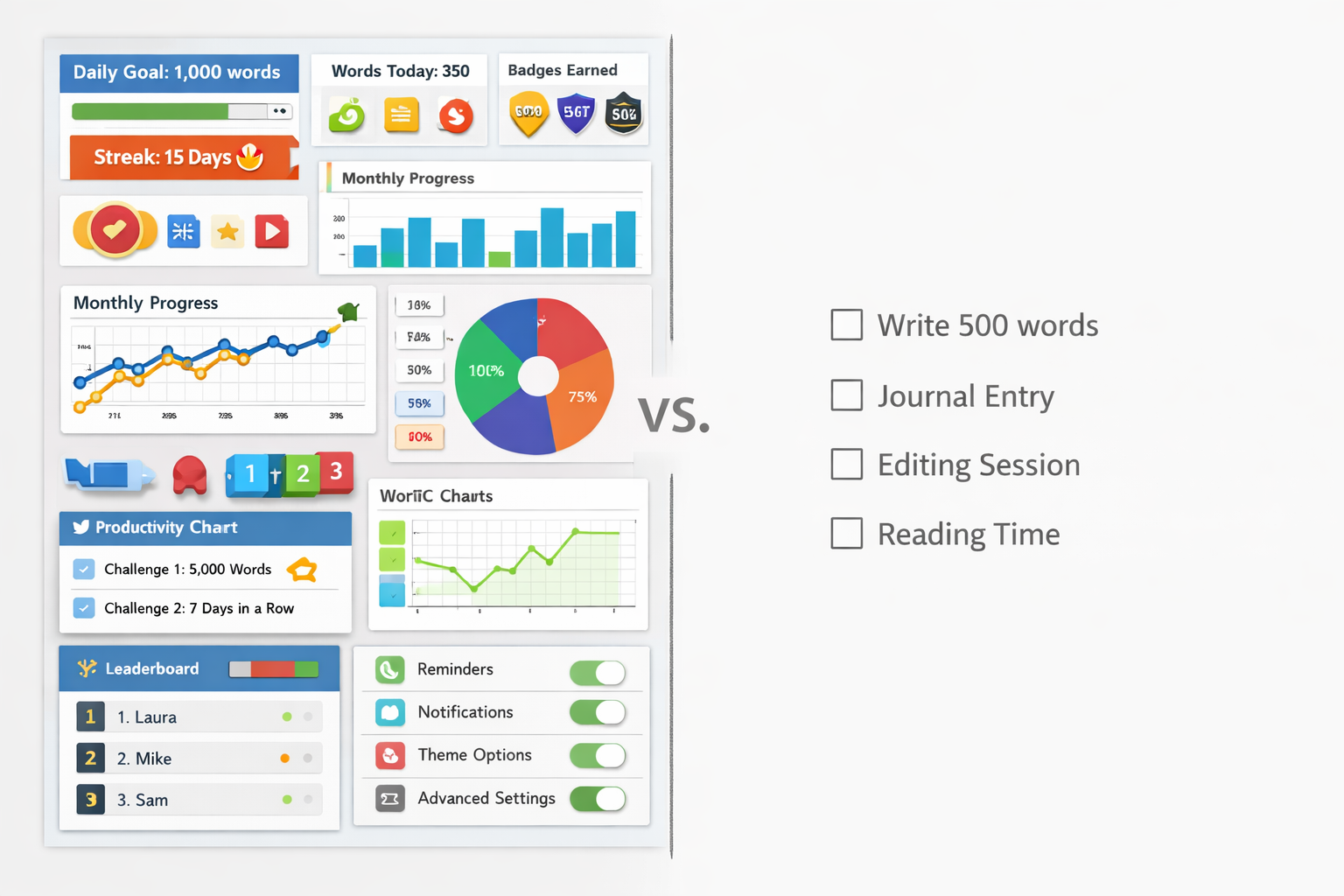
So I tried the apps. A lot of them. Some were beautifully designed but felt like they were built for people who already had perfect routines and just needed a place to log them. Others were so feature-packed that using them felt like a second job. I'd open one and get hit with dashboards, analytics, streaks, badges, weekly reports, monthly comparisons, and a settings menu deep enough to get lost in.
Then there were the simple ones. Just checkboxes. Did you do the thing? Yes or no. They were easy to use, sure. But they also felt hollow. Checking a box doesn't tell you anything about why you skipped the gym three days in a row. It doesn't capture the fact that you've been sleeping terribly because something at work is eating at you. A checkbox tells you what happened. It never tells you why.
I wanted something in between. Something that was easy enough to actually use every single day, but meaningful enough to help me understand myself better over time.
Writing as the Missing Piece
Around the same time I was cycling through habit trackers, I stumbled into journaling almost by accident. I was going through a stretch where my head felt constantly noisy. Not in a dramatic way. More like a low hum of things I needed to do, decisions I was putting off, and thoughts I kept recycling without ever resolving. Someone mentioned that writing things down, even just for a few minutes, could help clear the static. So I tried it.
And it did. Not in some overnight transformation way, but in a quiet, gradual way that snuck up on me. Writing for a few minutes each morning became the one part of my routine that actually felt useful. Not productive in the "check the box" sense. Useful in the "I can think more clearly now" sense.
The thing about writing is that it forces a kind of honesty you can't get any other way. When a thought is bouncing around in your head, it can feel urgent and important and overwhelming all at once. But the moment you write it down, it shrinks to its actual size. Half the things I was stressed about turned out to be one-sentence problems. "I need to email that person back." "I'm annoyed about a conversation from Tuesday and I should let it go." Stuff that felt enormous in my head but looked manageable on paper.
What surprised me was how the writing and the habits started to connect. My journal entries kept circling back to the same patterns. Weeks where I exercised consistently, I wrote about feeling sharper and more patient. Weeks where I skipped it, the entries got more scattered and negative. I didn't need a chart to show me the correlation. I could feel it in my own words.
That's when the idea started to form. What if there was a single place where daily writing and habit tracking lived together? Not a journaling app with habits bolted on. Not a habit tracker with a notes field buried in a submenu. Something built from the ground up around the idea that understanding your patterns and building better ones are the same activity.
Building the Thing I Wanted to Use
I'm a software engineer. I've been building things professionally for over a decade. So when I say "I decided to build it," I don't mean I casually sketched some wireframes on a napkin and handed them off. I mean I sat down, opened my editor, and started writing code.
DayGrid started as a tool for myself. No grand business plan. No pitch deck. Just a straightforward question: what would this look like if I built exactly what I wanted and nothing more?
The answer turned out to be simpler than I expected. I wanted a daily entry that combined a quick journal with habit check-ins. I wanted mood tracking that took five seconds, not five minutes. I wanted streaks that motivated me without making me feel like a failure when I missed a day. I wanted to open the app in the morning, spend two or three minutes with it, and walk away feeling like I had a handle on my day.
That was it. No social features, no leaderboards, no AI-generated insights telling me things I could figure out myself. Just a clean, daily rhythm that helped me pay attention to my own life.

The build took a while. Over 150 features, all tested against the same standard: would I actually use this tomorrow morning? If the answer was no, it didn't ship. That filter killed a lot of ideas that sounded good in theory but would have added friction in practice. Every feature that made it in had to earn its place by making the daily experience better, not just more complete.
Why I'm Sharing It
Here's the part where I'm supposed to say something about disrupting the wellness space or democratizing self-improvement or whatever founders are supposed to say. I'm not going to do that.
The honest reason I'm putting DayGrid out into the world is simpler. It helped me, and I think it could help other people too.
I'm not someone who naturally has good habits. I'm the kind of person who sets five alarms and still hits snooze. I eat the same lunch four days a week because making decisions about food exhausts me. I've started and abandoned more routines than I can count.
But the daily writing habit stuck. And once it stuck, other things started to click into place. Not because I suddenly became disciplined, but because I started noticing. Noticing what made good days good and bad days bad. Noticing which habits actually moved the needle and which ones I was doing out of obligation. Noticing that my mental health was directly tied to a handful of small, repeatable actions that I kept overlooking.
DayGrid is the tool that helped me notice those things. It's the app I open every morning before I open anything else. And after months of using it myself, it felt selfish to keep it to myself.
I don't think DayGrid is for everyone. If you already have a system that works, you don't need another one. But if you're like me, if you've tried the complicated trackers and the simple checklists and the wall calendars with four highlighters, and none of it quite worked, maybe the missing piece isn't more tracking. Maybe it's a few minutes of honest writing combined with just enough structure to help you see your own patterns.
That's what DayGrid is. That's why I built it.

DayGrid combines daily journaling, mood tracking, and habit tracking in one simple daily practice. Built by someone who needed it, for people who need it too. Start writing for free.
Ready to start writing?
DayGrid is free, takes 30 seconds to set up, and you can start with just one sentence.
Start Writing Free